

The page ranking #47 on Google is getting cited by ChatGPT. Yours isn't.
Why is this happening?
Research across thousands of AI citations shows nearly 90% come from URLs ranked position 21 or lower in Google. Page 4. Page 5. Content most marketers have written off.
The difference isn't quality. It's structure.
Google rewards pages that earn clicks. ChatGPT rewards pages it can extract answers from cleanly. These are different problems requiring different solutions—and almost nobody is solving for both.
Key Insight
I started paying attention to this after noticing a pattern across the 12,000 businesses I've helped with content. Their best-ranking pages weren't appearing in AI answers. Their buried pages sometimes were. Once I understood the mechanics—how AI actually retrieves, extracts, and cites content—the pattern made sense.
This guide is what I learned. Not tips. Mechanics. How these systems actually decide what to cite, and how to make sure it's you.
Why AI Traffic Is Different (And Better)
Here's what makes traffic from AI citations special: these visitors have already been qualified by the AI.
When someone asks ChatGPT "What's the best approach for trauma recovery?" and it cites your article, that visitor arrives with context. They know you're an expert. The AI has essentially pre-sold your credibility. Compare that to someone who clicks a random Google result—the conversion dynamic is completely different.
Research from multiple studies confirms this: AI-referred traffic converts differently because the visitor's trust has already been established by the recommendation.
The Core Framework: Retrieve → Extract → Cite
Before diving into tactics, you need to understand what AI systems actually do when they answer questions. Strip away the marketing jargon and it comes down to three steps:
| Step | What Happens |
|---|---|
| RETRIEVE | The AI searches its index and pulls potentially relevant content into its "context window." If you're not retrieved, nothing else matters. |
| EXTRACT | From retrieved content, the AI identifies specific pieces to use in its answer. Poorly structured content gets retrieved but never extracted. |
| CITE | The AI decides whether to attribute the information to you. Authority signals determine whether you get credit (and the traffic that comes with it). |
Most content fails at one of these stages. Understanding which stage you're failing at tells you exactly what to fix.
What Makes Content Retrievable?
ChatGPT primarily uses Bing's index. Research shows 87%+ of ChatGPT citations match Bing's top organic results. This isn't a secret—Microsoft invested $14 billion in OpenAI, and the integration is deep.
Critical insight: If you're invisible on Bing, you're invisible to ChatGPT.
Many businesses optimise exclusively for Google and wonder why they never appear in AI answers. Google has 78% of the search market; Bing has 12%. But when it comes to ChatGPT citations, Bing is what matters.
Your Retrieval Checklist
- Submit your site to Bing Webmaster Tools — This is non-negotiable. If Bing doesn't know you exist, ChatGPT can't find you.
- Allow AI crawlers in robots.txt — GPTBot, Google-Extended, ChatGPT-User, Claude-Web. Block these and you've made yourself invisible.
- Check your Bing rankings — Search your key terms on Bing, not just Google. If you're on page 5 of Bing, you have work to do.
- Ensure content is in HTML — Key information locked in JavaScript, images, or PDFs often doesn't get indexed properly.
What Makes Content Extractable?
This is where most good content fails. You've written something brilliant, it gets retrieved, but the AI uses someone else's mediocre article instead. Why? Because that mediocre article was structured for extraction.
When an AI synthesises an answer, it's essentially doing a copy-select operation. It scans retrieved content looking for text that directly answers the query with minimal processing required.
The Answer Capsule: Your Single Highest-Impact Optimization
An "answer capsule" is a self-contained block of text (150-300 characters) that:
- Answers a specific question completely
- Requires no external context to understand
- Contains no embedded links
Research shows over 90% of cited answer capsules contain no links. Not because links are penalised—because link-free text is easier to extract cleanly.
The Test: If this paragraph got extracted completely out of context and shown to someone, would it make sense and provide value?
Bad Example vs. Good Example
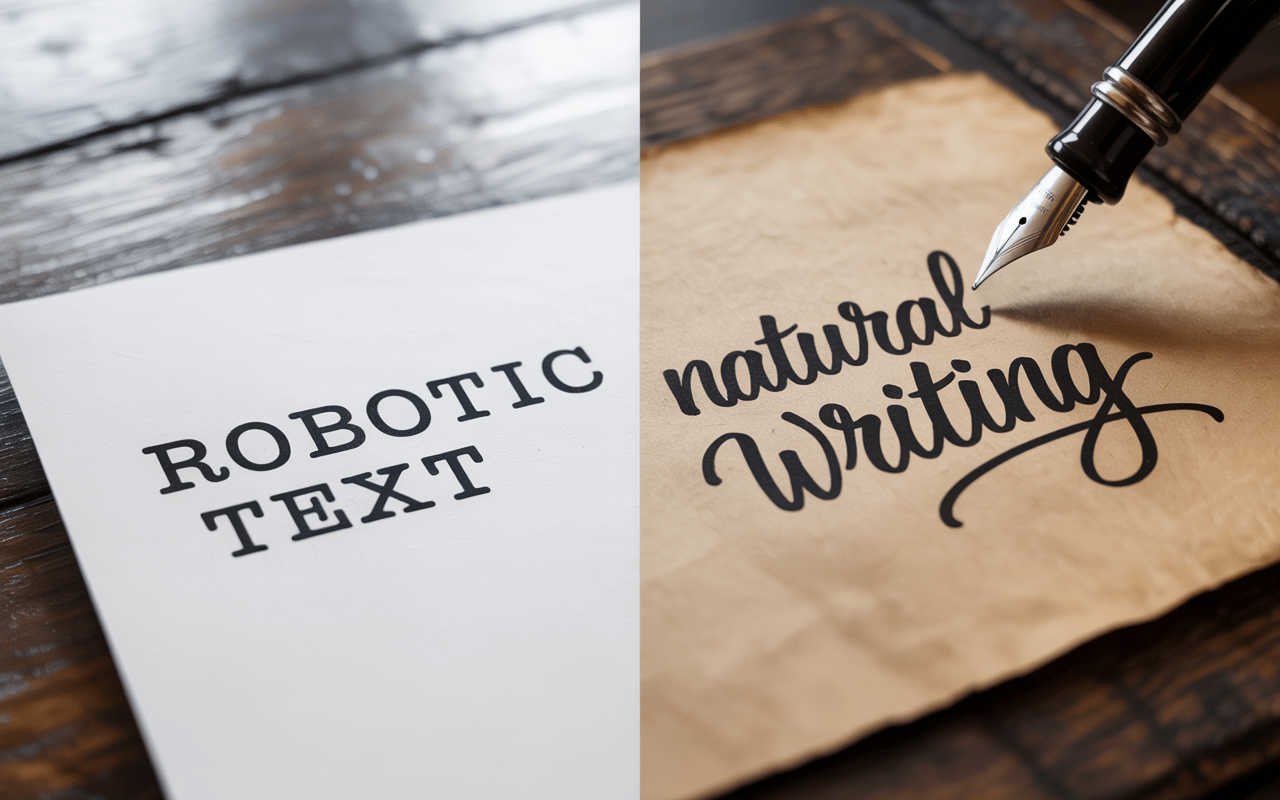
BAD: "Content marketing has evolved significantly over the years, with many businesses now recognising the importance of digital presence. When it comes to creating effective blog posts, there are several factors to consider. One of the most important is understanding your target audience. The key to successful blog posts is writing headlines that grab attention."
GOOD: "The key to successful blog posts is headlines that grab attention. Your headline determines whether anyone reads further—80% of people read headlines, only 20% read the body. Here's how to write headlines that work..."
Same information. One is extractable, one isn't. The AI will cite the second version because it can lift that text and use it directly.
The Answer-First Structure
LLMs process text sequentially and weight earlier content more heavily. When the model is synthesising an answer from multiple sources, it asks: "Which piece of text most directly answers this query with the least cognitive overhead?"
For every piece of content you create, front-load your key insights. The first 40-60 words should contain your main point. Journalism calls this the "inverted pyramid"—most important information first, supporting details after.
For complex topics where context is necessary, use what I call the "answer sandwich":
- Direct answer (1-2 sentences) — "The short answer is X"
- Context — "Here's why this matters and what you need to understand"
- Detailed explanation — The full breakdown
- Restatement — "So in summary, X because Y"
The AI gets what it needs immediately. Readers who need depth get it. Both audiences served.
Question-Based Headings
People ask AI questions. If your heading is literally the question someone asks, the semantic similarity approaches 1:1.
Instead of: "Schema Markup Implementation"
Write: "How Do I Add Schema Markup to My Website?"
The second version will get retrieved when someone asks ChatGPT that exact question. Headings also serve as "chunk boundaries"—most retrieval systems use headings as natural breaking points when splitting content. Your heading and the content immediately following it typically stay together.
What Makes Content Citable?
You've been retrieved. Your content has been extracted. Now the AI decides: do you get credit?
Citation comes down to authority signals. The AI has learned patterns from its training data about what sources are trustworthy. It's not checking your credentials directly—it's recognising patterns that correlate with reliability.
E-E-A-T: What It Actually Means for AI
E-E-A-T (Experience, Expertise, Authoritativeness, Trustworthiness) isn't an algorithm—it's a framework for what humans consider trustworthy. LLMs approximate human judgment by learning patterns.
- Experience & Expertise signals: Author credentials, first-person accounts ("In my 27 years of practice, I've found..."), specific details that could only come from real experience.
- Authority signals: External mentions from other sources, presence on Wikipedia (if notable enough), coverage in industry publications.
- Trust signals: HTTPS, clear contact information, transparent editorial policies, accurate information matching consensus.
Practical Application
Don't think "I need to add E-E-A-T signals." Think "How do I make it obvious I actually know what I'm talking about?" Put your credentials where they can be found. Author bio with qualifications. About page with background. In-content references where relevant: "In working with over 1,600 trauma survivors, one pattern I've seen consistently is..."
Brand Mentions vs. Backlinks: A Fundamental Shift
Research shows brand mentions correlate 0.664 with AI visibility. Backlinks only 0.218. This is a fundamental shift from traditional SEO thinking.
- Traditional SEO logic: "Get more backlinks."
- GEO logic: "Get mentioned more."
When an LLM assesses authority, it's not counting hyperlinks. It's looking at semantic patterns—how often does this entity appear in contexts that suggest reliability? A news article that mentions "Adewale Ademuyiwa, a trauma therapist with 27 years of experience" is a signal—even without a link.
Backlinks still help you rank in traditional search (which helps retrieval). But mentions build the consensus that drives citation.
The Consensus Effect
LLMs don't just look at your content. They've been trained on content about you from across the web. If multiple independent sources say the same thing about your brand, that's consensus.
Wikipedia accounts for 47.9% of ChatGPT's top citations. Reddit and Quora punch above their weight. Review platforms (G2, Trustpilot, Capterra) matter—domains present on multiple review sites earn 4.6-6.3x more citations than those absent.
This isn't about gaming these platforms. It's about participating in the ecosystems where your audience discusses your topic. Are you present in relevant discussions on Reddit? Do you have profiles on appropriate review sites? Have industry publications mentioned your work?
Your 30-Day Implementation Plan
Here's exactly how to apply these principles. Start with Week 1 and build from there.
Week 1: Foundation Audit
Days 1-2: Technical Infrastructure
- Verify your robots.txt allows AI crawlers (GPTBot, Google-Extended, ChatGPT-User, Claude-Web)
- Check your site appears in Bing's index (search site:yoursite.com on Bing)
- Submit to Bing Webmaster Tools if not already done
- Claim Bing Places listing if you're a local business
Days 3-4: Authority Audit
- Does every content piece have a visible author with credentials?
- Is your About page comprehensive with background, credentials, and evidence of experience?
- Do you reference your experience in your content where relevant?
Days 5-7: Baseline Measurement
- Create a list of 20 prompts your ideal customer would ask AI
- Run all 20 through ChatGPT and document: Who appears? What gets cited? Where do you stand vs. competitors?
- Set up GA4 custom channel group with filter: chatgpt|openai|perplexity|gemini|claude|copilot
Weeks 2-3: Content Restructuring
Pick your 5 highest-potential pages (based on traffic, strategic importance, or current rankings). For each page, make four passes:
- Pass 1 - Answer Positioning: Find the core answer on the page. Move it to within the first 1-2 sentences. Restructure so key insights front-load in the first 40-60 words.
- Pass 2 - Heading Optimization: Review all headings. Rewrite as questions matching how people query AI. Ensure proper H1→H2→H3 hierarchy.
- Pass 3 - Answer Capsules: Identify 3-5 key concepts the page answers. Write a self-contained 150-300 character explanation for each with no embedded links. Position prominently.
- Pass 4 - Extractable Elements: Add FAQ sections where appropriate. Convert comparisons to tables. Ensure processes are numbered steps.
Week 4+: Ongoing Optimization
Apply the "answer-first" template to all new content:
- Opening (first 60 words): State direct answer, include most important insight, no preamble
- Body structure: Each section starts with section-specific answer, one idea per paragraph (max 90 words), question-based headings
- Authority integration: Reference your experience, include specific data from your practice/business, author bio with credentials
- Monthly: Re-run your 20 test prompts and track changes in visibility
Platform Differences: ChatGPT vs. Gemini vs. Claude
While the core principles apply across platforms, there are notable differences in what each AI prefers to cite:
| Platform | Primary Index | Top Source | Key Insight |
|---|---|---|---|
| ChatGPT | Bing | Wikipedia (47.9%) | Traditional media mix |
| Google AI | Reddit (21%) | UGC platforms favoured | |
| Perplexity | Multiple | Reddit (6.6%) | More balanced distribution |
Notice how Google AI Overviews favour user-generated content (Reddit, YouTube, Quora) while ChatGPT leans toward traditional authoritative sources. Your strategy should account for where your audience is most likely to ask questions.
Measuring Your AI Visibility
There's a tracking challenge you should know about: free ChatGPT users don't send referrer data. Their traffic appears as "Direct" in your analytics. Paid users do send referrers, so you can track some AI traffic—but it's incomplete.
What to Track
Citation monitoring is more valuable than traffic tracking for GEO. You want to know: Are you being cited for your target topics? Which pages get cited most? How do you compare to competitors?
Start manually: Create your list of 20 prompts. Run them through ChatGPT weekly. Track if you appear, who else appears, and what gets cited. This takes 30 minutes and gives you real data.
Dedicated tools exist if you want to scale: Otterly AI, Semrush AI Visibility, Peec AI, and others automate this monitoring. But start manually to understand what you're measuring before investing in tools.
Common Mistakes to Avoid
Mistake 1: Optimising for Google while ignoring Bing. ChatGPT uses Bing's index. If you rank well on Google but poorly on Bing, you've solved the wrong problem.
Mistake 2: Burying answers in content. Your brilliant insight in paragraph 12 won't get extracted. Front-load everything.
Mistake 3: Over-linking within content. 90% of cited answer capsules have no links. Links create extraction friction.
Mistake 4: Obsessing over schema while neglecting structure. Schema is hygiene, not advantage. The AI doesn't read your schema during citation decisions—it reads your text.
Mistake 5: Building backlinks instead of mentions. Brand mentions correlate 3x stronger with AI visibility than backlinks do.
The Bottom Line
GEO isn't a new trick to learn. It's understanding how AI systems find, process, and credit information—then aligning your content with that reality.
The AI wants to find good answers and attribute them correctly. Your job is to make that easy.
Your Single Highest-Impact Action:
Take your top 10 pages. For each one, identify the main question it answers. Write a 150-300 character answer that makes complete sense in isolation. Put that answer prominently on the page.
That single change will do more for your AI visibility than schema markup, heading optimisation, and everything else combined.
The businesses that understand this now will capture traffic their competitors don't even know exists. The ones that wait will wonder why their content stopped reaching people.
The choice is yours.


Comments
Leave a Comment